
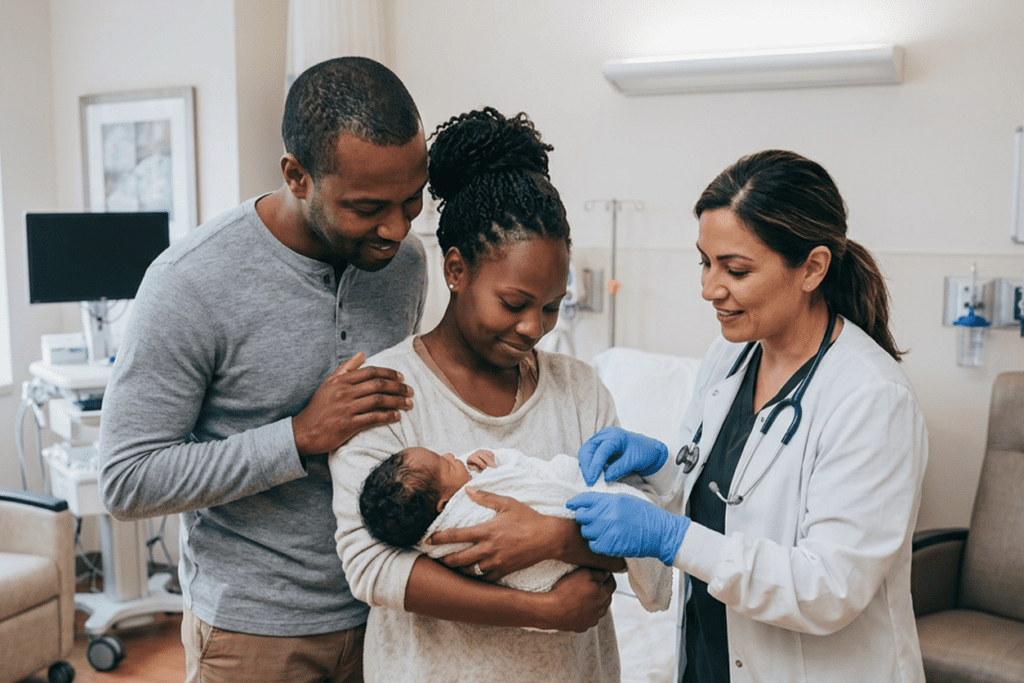
What happens after a positive newborn screen can define a child’s trajectory. In this webinar recap, walk through a positive newborn screening cystic fibrosis case to explore how modern newborn screening case management tools can help public health programs meet their goals.
When a newborn screens positive for cystic fibrosis, every day matters. The difference between a fast, well-coordinated follow-up and a fragmented one can shape a family’s path for years to come. Yet for many newborn screening (NBS) programs, the journey from a lab result to a confirmed diagnosis, early treatment, and a long-term care plan still involves manual steps, siloed systems, and too many opportunities for things to fall through the cracks.
In a recent webinar hosted by the Association of Public Health Laboratories (APHL), Jack Hysell, Primary.Health Director of Solutions Engineering, and newborn screening consultant Amy Gaviglio walked through a cystic fibrosis case study. They demonstrated how Primary.Health Newborn Screening Case Management’s digital infrastructure can transform NBS follow-up from the ground up.
The Growing Complexity of Newborn Screening
Newborn screening case management is getting more complex, noted Ms. Gaviglio, MS, CGC, founder of Connetics Consulting, LLC. Programs are adding more conditions to their panels. Those conditions often involve wider ranges of possible outcomes, more nuanced testing strategies, and the potential for longer follow-up and greater uncertainty for families and clinicians alike. The tools used to manage follow-up need to keep pace, and for many programs, they haven’t.
The starting point for any newborn, whether born in a hospital or with a midwife, is the dried blood spot card. That card makes its way to the public health NBS laboratory, where staff completes screening and enters results into a lab information management system (LIMS). What happens next is where things can get complicated. Or, with the right platform, the process is remarkably streamlined.
Following Baby Sophia Through the System
The webinar walked through a fictional but realistic case: Baby Sophia, whose newborn screen came back with an elevated immunoreactive trypsinogen (IRT) value and a detected Cystic Fibrosis Transmembrane Conductance Regulator (CFTR) variant. These two biomarkers flag her at risk for cystic fibrosis. In Primary Health’s NBS case management platform, Sophia’s record and program-defined follow-up workflow is created automatically from the lab data. No manual re-entry. No delay.
When a follow-up team member opens Sophia’s case, they see an immediate “action required” alert, her key lab values, and a prioritized worklist sorted by risk level. This means that babies like Sophia who need attention most urgently rise to the top. From there, the platform guides the team through next steps: notifying the primary care provider, initiating a referral, documenting the follow-up visit, and ultimately closing the case once diagnostic results confirm her status.
Crucially, every action is logged. The platform maintains a full audit trail, so programs can demonstrate traceability and accountability at every stage of the process.
Built for the Real World
One of the most practical platform features Gaviglio highlighted is flexibility. For example, if a case requires a repeat specimen, the system can flag when it arrives and automatically prompt the next step. The platform can also alert the team if the specimen hasn’t shown up when expected. Or, updated demographic information can be pushed back to the lab system to keep records in sync. And if a baby happens to screen positive for more than one condition, the platform can manage multiple workflows simultaneously without overwhelming the follow-up team.
The cloud-based, HIPAA-compliant, and HITRUST-certified system stores all data on U.S. servers, which is a key requirement for many state programs. Onboarding typically takes weeks to a few months depending on program complexity, noted Hysell. Crucially, the platform is designed to be as self-service as possible so teams aren’t dependent on vendors to make routine workflow adjustments.
The Goal: Babies and Families First
Throughout the webinar, Ms. Gaviglio emphasized that NBS technology only matters if it serves the babies and families at the center of the process. Smarter data flow, automated alerts, and seamless provider communication aren’t just operational improvements. They are the NBS infrastructure that ensures a child like Baby Sophia gets connected to a CF care team quickly, without anything getting lost along the way.
As newborn screening panels continue to expand, the programs that will serve families best are those investing now in systems to support what comes after the test. Learn more about Primary.Health Newborn Screening Case Management.
About APHL
The APHL works to strengthen laboratory systems serving the public’s health in the United States and globally. APHL represents state and local governmental health laboratories in the United States, including public health, agricultural, environmental and other related laboratories.